

Busbar in Electrical Systems: Types, Applications, and Key Design Considerations
- Busbars |
- Mar 26, 2026
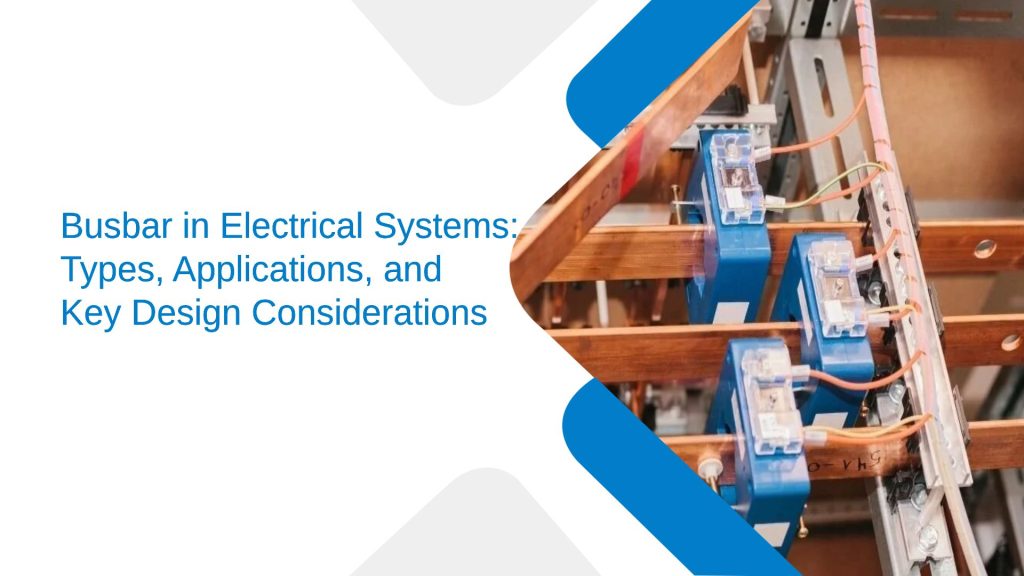
In modern power distribution infrastructure, the busbar electrical system has emerged as a critical component for ensuring efficient, reliable, and safe transmission of electrical energy. With the growing need for small, high-performance solutions by industries, there has been an extreme increase in the application of advanced busbars in electrical setups. The organisations, such as Eigen Engineering, remain crucial in supporting precision-engineered solutions of electric busbars to the unique specifications of industries.
What is a Busbar Electrical System?
A busbar electrical system consists of a conductive metallic bar or a group of bars (typically made of copper or aluminium) designed to carry and distribute electrical current within a system. The electric busbar, as a centralised node, also links several incoming and outgoing circuits and facilitates the smooth flow of power.
Unlike conventional cabling, a busbar in electrical installations reduces wiring complexity, improves system organisation, and enhances operational efficiency. Low-voltage and high-voltage applications are also very popular, which is why they are used in applications that require a high current with a low power loss.
Role of Busbar in Electrical Systems
The busbar electrical system performs several essential functions that support efficient power management:
- Power Distribution: It is a central station to which the electrical power is brought out of one source and to more than one circuit.
- Existing Transmission: Electric busbar transmits huge currents without failure or incident.
- System Connectivity: It involves the interconnection of electrical equipment in an organised and secure manner, including switchgear, transformers and panels.
These functions make the busbar in electrical systems indispensable for ensuring a consistent and uninterrupted power supply
Busbar Types in Electrical Systems
Selecting the appropriate configuration is essential for optimising the performance of a busbar electrical system. Different forms of busbars are tailor-made to suit different operational needs:
- Single Busbar Arrangement: This is the easiest of all busbar arrangement it is made up of only one conductor, which is linked to a number of circuits. It is also economical and simple to maintain, yet non-redundant.
- Single Busbar with Sectionalized Arrangement: This involves isolating sections on the busbar with isolators to be able to isolate the fault without de-energising the whole system.
- Main and Transfer Busbar Arrangement: This type of arrangement is popular in industries and involves a main busbar and auxiliary busbar so that when a load needs to be moved over a fault or during maintenance, it is possible.
- Double Busbar Arrangement: It has two independent busbars, and thus, it is very reliable and flexible, making it appropriate in critical power systems.
- Sectionalized Double Busbar: This is an improved type of electric busbar that integrates fault isolation and redundancy, which will ensure a continuous flow of power.
- One-and-a-Half Breaker Arrangement: This type of arrangement is generally employed in large substations, and it provides the best form of reliability since three circuit breakers are used in two circuits.
- Ring Main Arrangement: The busbar in this type is in the form of a closed loop, with the power supply path provided in two directions and downtime is reduced to the minimum.
- Mesh Arrangement: These are used with complicated systems where a mesh-type busbar offers more than two connexions increasing reliability in large-scale substations.
All these forms of busbars are selected considering system needs, complexity and reliability requirements.
Applications of Busbar in Electrical Systems
The versatility of the busbar electrical system allows it to be widely used across various industries:
- Switchgear Systems: Busbars resemble the interconnection of circuit breakers and isolators to a common source of power to have an efficient means of distribution.
- Electrical Panels: In industrial and residential panels, the busbar in electrical setups manages and distributes current effectively.
- Substations: High-capacity electric busbar systems are essential for handling and distributing power from transmission lines.
- Data Centers: UPS systems have busbars, which are employed to provide an uninterrupted and reliable power supply as well as minimal losses.
- Renewable Energy Systems: Solar, wind access makes use of a busbar in linking generation units to inverters and distribution networks.
- Electric Vehicles (EVs): EV battery systems are small electric busbar designs that are single-phase and utilised in the distribution of power within a battery.
- Manufacturing Plants: Busbars are used in industrial automation systems, which are reliable in providing stable and continuous power provision.
These applications highlight the importance of the busbar in electrical infrastructure across modern industries.
Key Design Considerations for Busbar Electrical Systems
Designing an efficient busbar electrical system requires careful evaluation of several critical parameters:
- Current Carrying Capacity: The busbar should be installed in such a way that the maximum current that is expected should not be exceeded. Ampacity has to be calculated properly in order to be operated safely.
- Selection of Material: Copper and aluminium are the widely used materials. Copper is more conductive, whereas aluminium is cost-effective with half the weight of copper.
- Size and Geometry: This directly relates to the size and geometry of the busbar and will determine the performance of the busbar. An efficient flow of current or dissipation of heat is achieved through the cross-sectional area optimisation.
- Thermal Management: It should include proper mechanisms of heat dissipation to avoid overheating and failure in the long term.
- Insulation and Protection: Proper insulation, coating, and grounding are essential to protect the busbar in electrical systems from short circuits, corrosion, and environmental damage.
- Mechanical Strength: The busbar must be able to resist mechanical forces that happen due to short circuiting, vibrations and thermal expansion.
- Environment: Environmental factors, which include humidity and temperature, as well as exposure to contaminants, need to be put into consideration by the design phase.
To have the highest level of performance and safety in its applications, Eigen Engineering insists on accuracy in all features of the busbar design.
Maintenance and Reliability
Regular inspection and maintenance are vital to ensure the longevity of a busbar electrical system. Such problems as loose connections, overheating, depreciation of insulation, and mechanical damage can be observed. Barring system failure, timely attention and remedies are taken to maintain power flow.
Read Also: What Is a Copper Busbar and How Is It Used in Electrical Systems?
Conclusion
The busbar electrical system is a cornerstone of modern electrical infrastructure, offering efficient power distribution, reduced energy losses, and enhanced system reliability. Through the knowledge of the different types of busbars, their uses, and the design limitations of busbars, industries would be able to optimise their electrical system to enhance their performance.
In Eigen Engineering, our central business is the provision of high-technology electric busbar solutions to the various industrial requirements. We have been successful in designing and producing superior quality busbars in the electrical systems to achieve maximum efficiency, safety, and durability for all uses.
About Author
Related Posts