
What is a Laminated Busbar? Purpose and Benefits
- Busbars |
- Mar 26, 2026
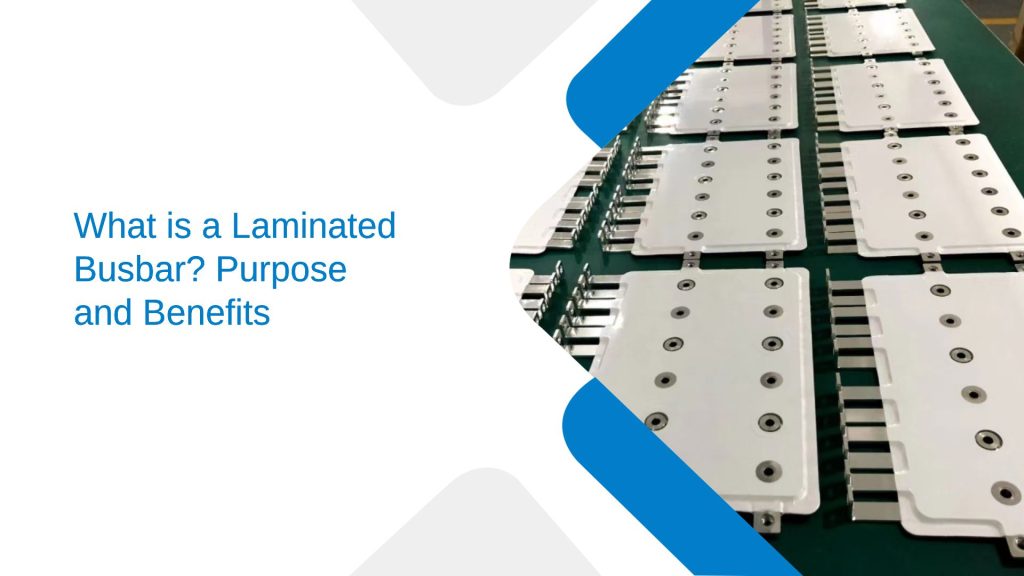
In a contemporary electrical and electronic system, it is important to have a good distribution of power to ensure good performance, safety and reliability. The laminated busbar has proved to be a key ingredient in the accomplishment of these goals, especially in high-power applications with space constraints. A laminated busbar, also known as the backbone of power systems, has been proposed as a solution with a small size, excellent solidity, and efficiency because it has to carry electric current between subsystems.
In the case of organisations like Eigen Engineering, it is important to learn more about laminated busbar technology as a way of providing superior electrical solutions to diverse industries.
What is a Laminated Busbar?
A laminated busbar is a highly designed component and consists of multiple layers of conductive material usually copper or aluminium that is separated by very thin dielectric insulation. These layers are stuck compressed under heat and pressure to create one rigid structure that serves as an incorporated electrical conductor.
A laminated busbar is an embedded compact conduit that combines several conductors as opposed to a traditional wiring system. This optimised busbar design ensures controlled electrical performance, reduced space requirements, and enhanced system efficiency. Laminated busbars can be made in a variety of designs based on the application of flat-strip, plate, or complicated geometry.
Purpose of Laminated Busbars
The main usage of a laminated busbar is to distribute electric power efficiently in a system; it ensures electrical stability and thermal regulation. It is a central route of current flow between sources of power and other subsystems.
Laminated busbars allow for high-performance applications, like in electric vehicles, renewable energy systems and industrial equipment, apart from these it also allow:
- Low power to size ratios.
- Eliminated or minimised electrical losses at transmission.
- Better correlation with active and passive elements.
Moreover, busbars that are laminated are important in thermal control. They are made of highly conductive materials, which assist in dissipating heat that may be produced in a given operation process and in the process performance of the sensitive components, as well as enhancing the overall life cycle of the system.
Key Benefits of Laminated Busbars
The laminated busbar systems present a series of performance-based-benefits that deal with the weaknesses of traditional power distribution solutions. They are highly efficient, reliable and well integrated in terms of their superior construction, and this is presented in terms of modern applications in the electrical sector.
Enhanced Reliability
Among the greatest benefits of a laminated busbar, the strong and integrated structure can be distinguished. Conventional wiring systems require numerous cables, connectors, and points that contribute to the high chances of making errors during the assembly process, as well as mechanical breakdowns.
On the contrary, laminated busbars are engineered and assembled into one. This will ease the complicated nature of installations and reduce the possibility of loose connections, vibrations and failure of installations and also maintenance problems. This is a very important advantage in the case of industries that demand high reliability, like aerospace and automotive.
Reduced Inductance
The laminated busbar is well designed, and the inductance is reduced considerably. The near operation of the conductive layers, which are divided by conductive dielectric material, enables counteraction between the two opposing magnetic fields.
The outcome of this decrease in inductance is:
- Better electrical efficiency.
- Reduce electromagnetic interference (EMI).
- Improved operation of electronically sensitive systems.
These properties render laminated busbars suitable in applications of high frequency and speed.
Improved Thermal Management
In the new electrical systems, the thermal performance is a crucial consideration. Laminated busbars are made in such a way that the amount of heat generated is minimised and heat dissipation is easily provided.
The conductive layers become thermal channels, and the extra heat is transferred to the heat sinks or cold systems by the conductive layers. What makes this achievable is stable operation, especially in high-power conditions, e.g. electric vehicles and power electronics.
Increased Capacitance
The other significant advantage of a laminated busbar is that of capacitiveness. The layout, combined with dielectric insulation, allows electrical energy to be stored inside the busbar.
Such a high capacitance assists in stabilising the voltage, decreasing the magnitude of the voltage spikes and enhancing the overall behaviour of the electrical system.
Space and Weight Optimisation
The modern-day applications require small and lightweight solutions. Laminated busbars (also called laminated terminated busbars, LT busbars) can be used as an alternative to large cable assemblies, where several conductors are combined into one piece of fabric.
This efficient busbar design reduces system size, lowers weight, and enhances ease of installation, particularly valuable in applications like electric vehicles and aerospace systems.
Customisation and Design Flexibility
Eigen Engineering specialises in delivering custom busbars tailored to specific application requirements. Busbars of laminated form can be constructed to electrical, mechanical and thermal specifications.
Customisation will be provided as:
- Complicated forms and structures.
- Built-in mounting capabilities.
- Interoperability with connectors with enhanced capabilities.
Such flexibility gives the engineers the opportunity to optimise the system layouts and then attain high performance.
Lower Assembly and Maintenance Costs
Laminated busbars also save time and labour used on assembly by cutting down on the number of individual components and the amount of assembly work. Also, they are more durable in construction, and this reduces the maintenance needs throughout the life of the product.
To the manufacturers, this would translate to high production and low operation costs.
Applications of Laminated Busbars
Laminated busbar technology has been extensively used in various industries and the following are some of the industries that can use it:
- Automotive and Transportation: Battery system, electric cars, hybrid cars.
- Energy Sector: Generation of power, invertors and power energy systems that are renewable.
- Industrial Equipment: Automation, welding and motor drive.
- Telecommunications: Liberty download centre, network infrastructure and communication systems.
- Aerospace and Defence: Electronic systems of high reliability.
The expanding laminated busbar market reflects the increasing demand for efficient power distribution solutions in these sectors.
Laminated Busbar vs. Flexible Busbar
The laminated and flexible busbars utilise layered conductors, but they are different in mechanical properties. Rigid Laminated busbars are designed to be structurally stable. Laminated busbars are available with rigid materials that do not include conductive foils.
Flexible busbars contain more thin conductive foils, which enable them to flex where necessary or squeeze into spaces. The selection is determined by the requirements of the use, and where the laminated bus bars are favoured in installations to be used in high-performance and high-reliability applications.
Read Also: What Is a Copper Busbar?
Conclusion
A laminated busbar is a highly advanced technology in power distribution. It provides excellent electrical performance, mechanical strength, thermal control and installation efficiency by the incorporation of more than one conductive layer into a single insulated product. In electric car applications as well as industrial power, the laminated busbar has been instrumental in facilitating small and powerful applications.
For companies like Eigen Engineering, expertise in laminated busbar solutions (including advanced busbar design and precision manufacturing of custom bus bars) ensures the ability to meet the demanding needs of modern electrical infrastructure. In a fast-paced electrification process globally, the laminated busbar remains an essential element in secure, effective and sound power systems.
About Author
Related Posts