
Blanking Process in Sheet Metal Fabrication
- Uncategorized |
- Jan 21, 2026
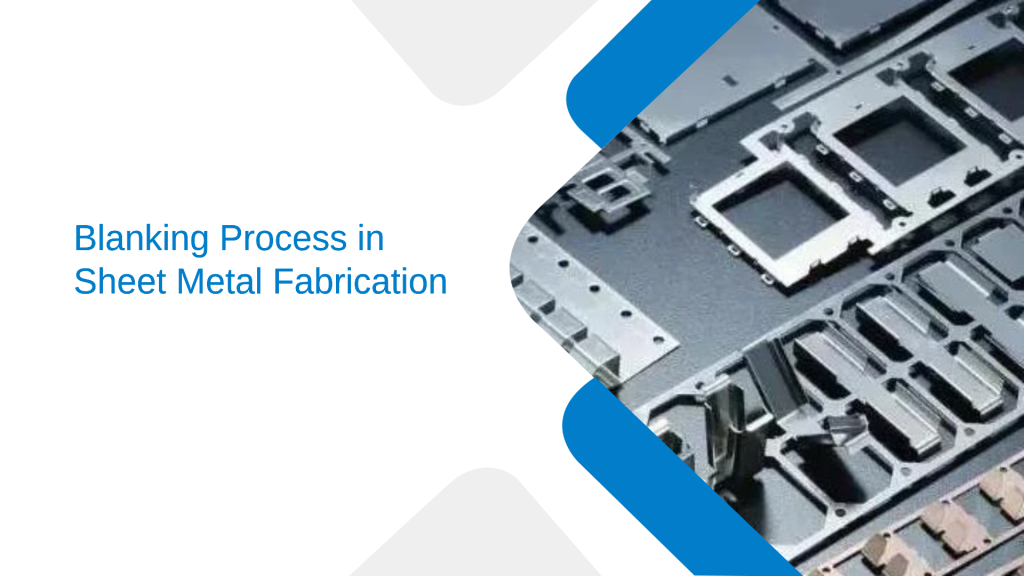
The blanking process is a fundamental operation in sheet metal fabrication, widely used across manufacturing industries for producing precise and repeatable components. At Eigen Engineering, the blanking process plays a critical role in achieving dimensional accuracy, high production efficiency, and consistent quality in sheet metal components. Understanding the blanking process is essential for manufacturers seeking cost-effective and scalable metal fabrication solutions.
What Is the Blanking Process?
The blanking process refers to a sheet metal cutting operation in which a flat metal sheet or coil is cut into a specific shape using a punch and die. A desired product is the cut-out piece called a blank, and the rest of the sheet would be considered as scrap or recycled. This is unlike blanking, where the other method used is cutting, and the resultant sheet is the end product.
Sheet metal blanking is commonly used to create uniform components that serve either as finished parts or as workpieces for subsequent operations such as bending, stamping, or deep drawing. This is usually performed as a cold working exercise, maintaining both dimensional and material integrity.
Difference Between Blanking and Punching
Although often confused, blanking and punching serve different purposes in sheet metal fabrication. In the blanking process, the removed piece is the functional component, while the remaining sheet is scrap. Conversely, punching involves having material removed to form holes or cut-outs, and the rest of the sheet is the one that will be used.
This distinction is pertinent during choice of blanking sheet metal or punching due to the fact that it has a direct effect on material utilisation, tooling design, and manufacturing efficiency.
Steps Involved in the Blanking Process
The blanking process follows a structured sequence to ensure precision and efficiency:
- Material Selection
This starts with the selection of an appropriate metal sheet or coil, depending on the mechanical properties that are needed, thickness, and use. Common ones are carbon steel, stainless steel, aluminium and alloy steels.
- Sheet Metal Preparation
The sheet metal is cleaned before blanking, which is aimed at eradicating contaminations and defects. Correct preparation will guarantee clean cuts and avoid damage to tools.
- Blanking Die Design and Setup
The blank geometry is normally covered by a blanking die, which is a hardened tool steel or carbide die designed to fit the blank geometry required. The die assembly can be made up of a punch and a die cavity, which can be placed in a press with a lot of care.
- Cutting Operation
The punch is used in the cutting stage where it punches a high pressure against the metal across the edges of the dies. The metal is misshapen and broken, leaving a blank of specifically shaped metal.
- Blank Removal
When cutting is finished, the blank cut is removed from the remaining sheet. Speed and consistency are normally ensured through automated systems.
- Quality Control and Inspection
Each blank produced through sheet metal blanking undergoes inspection to verify dimensional accuracy, edge quality, and surface condition. In critical requirements, fine blanking can be used.
- Scrap Metal Management
The remaining metal will be gathered and recycled, which will contribute to effective usage of materials and sustainability.
- Secondary Operations
Depending on the application, secondary processes such as deburring, surface finishing, or forming may follow the blanking process.
Advantages of the Blanking Process
Several key advantages drive the widespread adoption of the blanking process:
- High Precision and Tight Tolerances: When performed with quality tooling, blanking sheet metal delivers consistent accuracy and repeatability, meeting stringent industrial standards.
- Cost Efficiency in Mass Production: The automated nature of the blanking process enables high-speed production with minimal labour involvement, significantly reducing per-unit costs.
- High Production Rates and Scalability: Sheet metal blanking supports both low- and high-volume manufacturing, making it ideal for scalable production environments.
- Efficient Material Utilisation: Advanced nesting and die design minimise scrap generation, improving material efficiency during blanking metal operations.
- Uninterrupted Quality: All blanks manufactured are almost similar, and therefore, there is a level of uniformity among large production batches.
- Less Secondary Processing: Good edges and dimensional accuracy tend to eliminate any further finishing procedure.
Applications of Sheet Metal Blanking
The blanking process is widely used to manufacture components such as washers, brackets, gears, clutch plates, coins, electrical parts, and automotive components. In many cases, blanks serve as the starting point for deep drawing, stamping, or forming operations.
Fine blanking is often employed for applications requiring smooth edges, minimal burrs, and high dimensional accuracy, especially in automotive and precision engineering industries.
Role of Blanking in Modern Sheet Metal Fabrication
In today’s manufacturing environment, the blanking process is essential for achieving efficiency, precision, and cost control. Compared to other cutting techniques, blanking metal operations offer a balanced combination of speed, accuracy, and material optimisation. When integrated with advanced tooling and automated presses, sheet metal blanking significantly enhances overall production capability.
Conclusion
The blanking process is a vital component of sheet metal fabrication, delivering precise, high-quality parts with excellent repeatability. From material selection and die design to cutting and inspection, every stage of the blanking process contributes to efficient manufacturing and reduced waste.
At Eigen Engineering, the blanking process is executed using advanced tooling, strict quality controls, and optimised production techniques to ensure reliable and accurate sheet metal components. By leveraging sheet metal blanking and modern blanking technologies, Eigen Engineering continues to meet the evolving demands of industrial manufacturing with precision and consistency.
About Author
Related Posts