
What is Metal Punching: Process, Benefits and Best Practices
- Sheet Metal |
- Feb 12, 2026
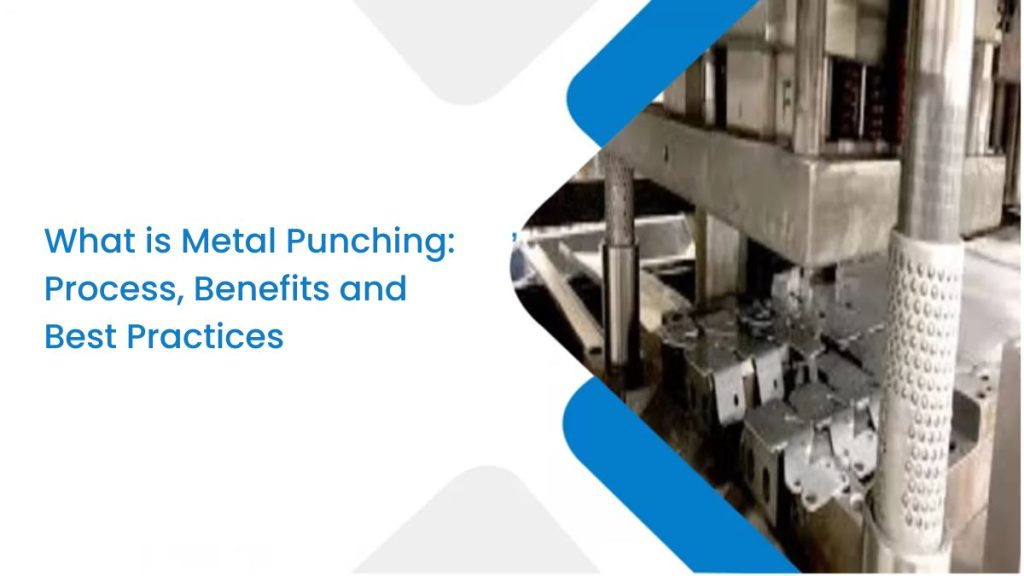
Metal punching is a very popular manufacturing method within contemporary fabrication, which allows the efficient manufacture of accurate and repeatable components of sheet metal. At Eigen Engineering, next-generation punching solutions serve to cater to the industries that require precision, stability and affordability, in terms of scale. Understanding the fundamentals of the punching process, its benefits, and recommended best practices helps businesses select the right punching operation for their production requirements.
Understanding the Punching Operation
Punching is a derivation of sheet metal forming where material is cut or formed with the help of a punch and die tool. During the punching process, a punch applies controlled force to a metal sheet, driving it through a die to create holes, cut-outs, or formed features. The extracted material, which is referred to as a slug, is detached from the main sheet, and the remaining workpiece is assumed to have the required shape.
The punching operation in sheet metal relies on a shearing action rather than melting or grinding, which ensures dimensional consistency and high production efficiency. Scrap material generated during the punching process can be recycled, making it a sustainable manufacturing solution.
Overview of the Punching Process
The punching process can be broadly classified into two main categories: cutting and forming. These two are essential in metal fabrication, and they are not chosen randomly; they depend on the design and functional needs of the component.
Cutting-Based Punching Process
Cutting is a core punching process where material is separated from the sheet metal blank. This type of punching operation in sheet metal generally follows several stages:
- Shearing: To be ready to be punched, large sheets of metal are broken into manageable sizes.
- Blanking: In this punching process, the material is cut around a predefined perimeter to create the final workpiece. The blank component is transformed into the usable product.
- Punching: Punching is done to make holes or internal characteristics in the sheet metal. The extracted part, which is referred to as a slug, is discarded or recycled. One of the most widespread punching processes is hole punching because it is very versatile and does not take long.
Punching processes that involve cutting are most suitable for manufacturing parts that have an edge and are of a uniform size, particularly when dealing with high-volume output.
Forming-Based Punching Process
Forming is another essential punching process where the material is shaped rather than cut. Forming dies rather than cutting die are used to exert pressure on the metal and deform it to a required geometry. The techniques involved in this punching operation are bending, embossing, flanging, coining, and drawing.
Operations that are forming are especially adaptable toward manufacturing larger or more complicated components that need structural roundness or surface traits without a material cut-off.
Benefits of the Punching Operation
The punching process has several benefits that render it inevitable in the process of sheet metal fabrication:
- High Production Efficiency: The punching process supports rapid cycle times, making it ideal for mass production.
- Cost-Efficiency: After the tooling has been set up, the punching process results in the manufacture of parts at a much lower cost per part.
- Flexibility in Design: Designing a custom die allows producing intricate shapes, holes, and designs.
- Material Utilisation: Scrap generated during the punching operation in sheet metal can be recycled, improving sustainability.
- Consistency and Accuracy: Automated and CNC-controlled punching processes ensure repeatable quality across production runs.
Such advantages enable Eigen Engineering to serve as a provider of dependable as well as scalable solutions in punching to various sectors.
Applications of Metal Punching
The punching operation in sheet metal is used extensively across various sectors, including:
- Automotive Industry: Body panels, brackets, mounts, and structural components are manufactured using the punching process.
- Electronics and Electrical Enclosures: Panels and housings, although they are basic and important, must be punched accurately to enhance safety and functionality.
- Construction and Cladding: Metal punching: Metallic panels and structural members are produced as architectural cladding.
- HVAC Systems: The front frame of the air duct, range of panels, ventilating, and various housing structures and equipment depend on the use of precise punching processes to be proudly manufactured.
- Aerospace and Industrial Equipment: Punched components must be of a lightweight material, but very strong, as this component is important in performance and safety.
Choosing the Right Punch Press
Selecting the appropriate equipment is vital for an effective punching process:
- Mechanical Punch Press: It is a high-speed punching process that is performed with the use of mechanical force and is recommended for repetitive and consistent work.
- Hydraulic Punch Press: This one uses fluid pressure to provide controlled force; the method is recommended for thicker materials and challenging shapes.
- CNC Punch Press: Advanced designs which can be programmed in terms of punching, which provide flexibility, precision, and faster set-up duration.
CNC punching is specifically useful with custom projects and complicated process sequences of punching.
Suitable Materials for the Punching Process
Material properties in a punching operation that are crucial to the success of the process include malleability, strength, and thickness. Typical metals that are used to punch are mild steel, stainless steel, aluminium, copper and iron-based alloys. Selecting the appropriate material ensures structural integrity and reduces tool wear during the punching process.
Best Practices for the Punching Process
The punching operation should be supported with established designs and production best practises in order to deliver the best outcome.
- Maintain Proper Bend Radius: Internal bend radii should be equal to or greater than material thickness.
- Optimise Hole and Slot Dimensions: Hole diameters should not be smaller than the sheet thickness.
- Control Tolerances: Adequate tolerance prevents cracking and material failure during punching operations.
- Select the Right Metal: Material choice influences tooling requirements, die selection, and production efficiency.
- Consider Thickness Limitations: Most punching operations perform best within controlled thickness ranges.
Adhering to these best practices enhances quality, reduces waste, and improves tool life.
Punching Process Alternatives
Laser cutting is also very precise, but is normally costly when used in high quantities of production. The punching process remains faster and more economical for repetitive manufacturing, especially when producing identical parts at scale. Punching operations are also more forceful and allow the processing of different metals and different thicknesses to be processed.
Metal Punching at Eigen Engineering
Eigen Engineering produces high-technology punching services backed up by modern CNC punch presses and precision tools. With expertise in design optimisation, material selection, and production planning, Eigen Engineering ensures that every punching process meets stringent quality and performance standards.
It is the combination of technical achievement and the ability to punch the sheet metal which has enabled Eigen Engineering to serve the industry with various activities with dependable, scalable, and affordable metal-fabrication requirements.
Conclusion
The punching process is a cornerstone of modern sheet metal fabrication, offering unmatched efficiency, accuracy, and scalability. By understanding the punching operation, selecting appropriate materials and equipment, and following proven best practices, manufacturers can achieve high-quality outcomes consistently. At Eigen Engineering, metal punching is executed with technical expertise and advanced machinery to deliver reliable solutions that meet demanding industrial standards.
About Author
Related Posts