
A Complete Guide to Precision CNC Machining
- CNC Machining |
- Aug 14, 2026
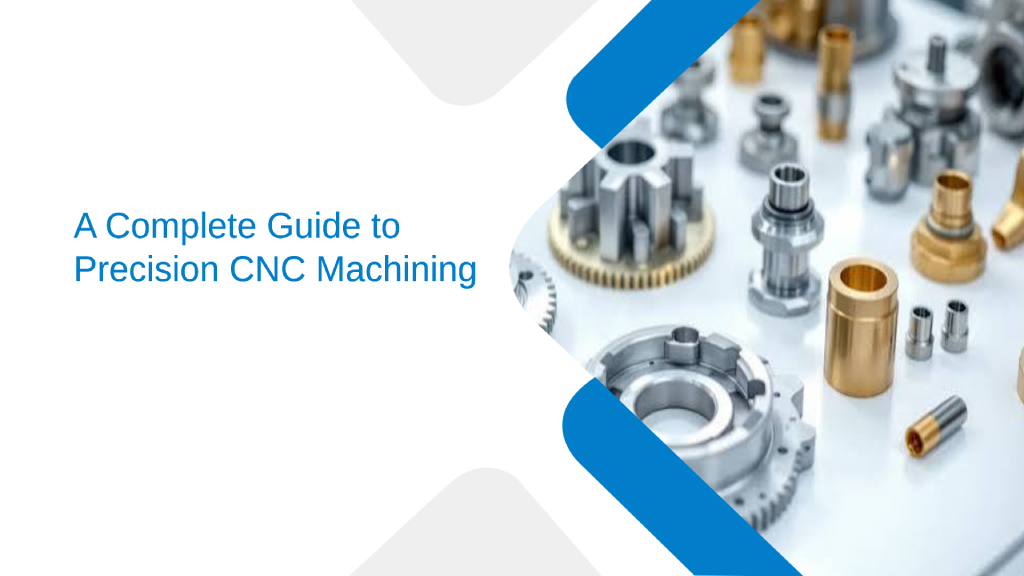
In today’s innovative and digitalised world, precision, clarity and consistency play a vital role. With growing demand in industrial sectors such as aerospace, automotive, paramedical, and electronics, engineering products require enough consistency and endurance to be maintained. This is where precision CNC machining plays a significant role. It has now become one of the most reliant manufacturing methods for the generation of high-quality parts that meet strict engineering standards. The idea behind using precision machining is to keep businesses up to date with the best tools and mechanisms.
What is Precision CNC Machining?
The main thought which occurs to minds when understanding the mechanical procedure of precision CNC machining refers to a computer-operated manufacturing process in which cutting tools remove material from the main workpiece to curate several parts with higher volume and great finishes.
1] Design and Approach:
CNC stands for Computer Numerical Control, which means that the movement of the equipment is channelised by digital instructions generated from a CAD model. Since aerospace parts need to meet the best standards and safety protocols, they turn to precision machining, which ensures consistency and complete reliability. The term precision indicates that the process is capable of maintaining accuracy, improving consistency and creating room for tolerance.
The process of precision CNC machining commences with the creation of an engineered CAD design. Professionals define the approach, tolerance and features through the digital model. This model is then inserted into CAM software, which produces the toolpaths and converts them into instructions which can be perceived by the machines. The process involves securing the workpiece, installing cutting tools and assessing the machine.
2] Maintaining Accuracy:
During the mechanical process, CNC tools are used for diversified operations like milling, turning, drilling, boring, tapping, and grinding. Once the machining process is complete, the finished part is inspected by precision measuring tools such as micrometres and callipers to be doubly sure of the accuracy. The leading reasons for global manufacturers to choose CNC machining are its definiteness. The parts in which it is used are usually related to aircraft engines, medical instruments, automotive transmissions, and electronic devices.
These machines usually maintain the decorum in areas of large productivity and mechanical scope. Another important benefit is the recurring nature, which involves no break in persistence. Once a machining program has been created and checked, the machine can reproduce the very same workpiece in endless numbers without any halt. This level of consistency cannot be matched with conventional machinery.
3] Usability:
The idea behind aerospace CNC machining is that it is also widely used to generate difficult patterns or geometries which cannot be analysed manually. Multi-axis CNC machines can approach a workpiece from various angles in a single setup, allowing intricate contours, pockets, and curved surfaces to be machined accurately. This skill and sharpness is very important for industries like aerospace and medical engineering where the mechanical parts are cross-dimensional.
A large variety of materials can be machined using precision CNC machining. The CNC machining of aerospace parts uses metals with more resistance and durability like aluminium, stainless steel, carbon steel, brass, copper and engineering plastics like Nylon. The choice of materials depends on resistance, durability, strength and substance. The flexibility to machine both metals and plastics makes CNC machining perfect for a wide range of industries and applications.
4] Tolerance level and New Day Use Case:
Tolerance control is another major aspect of CNC machining in aerospace. Tolerance refers to the allowable variation from a specified dimension. With surgical levels becoming more portable, joint level energy consumption is treated as a design impediment. With the tolerance level and accuracy depicted by precision machining, the idea of unlevelled designing seems to subside. Achieving such high-skilled expertise, volumised manufacturing and stability in workmanship helps protolab experts describe how a built-in appliance is supporting manufacturing.
The applications of precision CNC machining are advanced. In the aerospace industry, this type of machining is beneficial for structural brackets, engine components, landing gear parts and dimension control. In the paramedical sector, CNC machining generates surgical tools, orthopaedic implants, dental structures and also helps in diagnosis. Automotive manufacturers rely on CNC machining for engine components and recreating fuel system components.
5] Benefits of CNC Machining:
Unbeatable and unmatched in comparison to traditional machining, CNC machining in aerospace has several benefits. In the medical sector, it works with aluminum, beryllium, brass, bronze, carbon steel, stainless steel, cobalt, molybdenum, fibreglass, granite, wood and polythene. Manual machining depends mainly on the functional skills of the operator and is generally slow. Precision machining gives faster production, ensures more efficiency, higher tolerance levels, and low cost maintenance.
Various factors are in play which affect the accuracy of precision CNC machining, including machine rigidity, tool wear, heat resistance, workload endurance and cutting techniques. Daily assessment and quick maintenance help to stimulate the process without any faults. Modern manufacturing facilities often use advanced inspection systems and statistical process control techniques to ensure ongoing quality.
Conclusion
The approach towards precision CNC machining is a strong key driver in the growing world of electronics, paramedicine, and aerospace. Ensuring accuracy, consistency and complete efficiency, the process helps manufacturers to meet their industrial demands. By using computer-controlled equipment to remove material with exact precision, manufacturers can generate complex parts which cannot be made manually.
About Author
Related Posts