
Key Differences between Flexible Busbar and Rigid Busbar
- Busbars |
- Aug 10, 2026
In modern powerhouses and distribution systems, busbars play an important role in allocating current. In industrial set ups, renewable energy bases, data centres and switch board panels, a commercial system and strong infrastructure can rely on busbar systems. From flexible to fixed bus bars there are relatively distinctive choices for substations, electrical units and industrial plants. A flexible busbar vs rigid busbar serves for strong conductors of electricity, good performance and low cost maintenance.
Understanding Rigid Busbar vs Flexible Busbar
Understanding the main differences between a flexible busbar and a rigid busbar is important for engineers, contractors, responsible managers and contractual teams. Selection of the correct busbar depends on durability, longevity and sustenance, which helps to ensure safety and long term cost effectiveness.
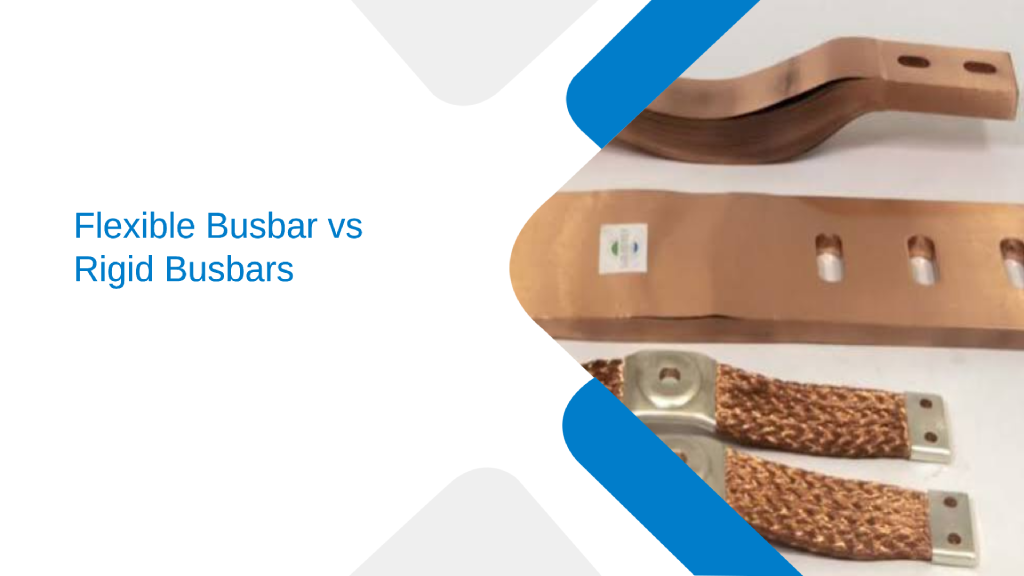
A rigid busbar is a solid conductor made of copper or aluminium, typically used in straight, strong bars.
A flexible busbar, on the other hand, is composed of multiple thin layers or strands of copper or aluminium laminated together. This flexible construction helps the busbar to bend and be used for long term fabrication. These busbars are low-maintenance, highly durable, ensure greater thermal efficiency, and help reduce energy consumption.
Mechanical Elasticity and Installation Variation:
The most prominent difference between a flexible busbar and a rigid busbar is their mechanical reliance. Rigid busbars maintain a certain shape and require cutting, drilling, bending, and correct alignment. Any change in design can lead to additional fabrication work. Flexible busbars can be bent to any limits and are used for simpler routing. With time-saving mechanisms and adaptability, the process is simplified.
Another important difference lies in installation period and labour charges. The idea behind a flexible bar system usually requires complete reliability, accuracy and accessibility at all points. Alignment accuracy is critical to avoid mechanical stress at connection points. While rigid bars are more firm and resolute, flexible busbars accommodate more variation and are more conducive.
Thermal efficiency:
There is a strong comparison between flexible and rigid busbars, which provide continuous support that is produced from metals like copper and aluminum. Rigid copper busbars usually provide slightly lower electrical impedance. The idea behind flexible busbars may depict more resistance due to their laminated framework, but modern applications make a potential difference.
Thermal efficiency is another area where flexible busbars offer many benefits. Electrical conductors expand and contract with temperature changes. In rigid systems, thermal expansion can produce mechanical tension at joints, which loses its grip over time. Whereas flexible busbars absorb more heat, are more practical and have a layered constitution which ensures reliability.
Movement and pace:
The ability to withstand vibration and movement is a benefit of a flexible busbar, which ensures complete stability. Mechanised tools such as transformers, power generators, motors, railway systems, and marine installations always notice frequent vibrations. A rigid bar can transmit vibration to various terminals without cracking, splitting, and fatigue. Flexible busbars act as vibration absorbers and prevent any mechanical disturbance.
The impending need to use flexible busbars is advantageous in electrical settings. Their ability to bend in various directions permits engineers to create better drawings. For modern infrastructure where space is important, flexible bars seem to be highly useful.
Overcoming faults smoothly and maintenance:
Ensuring mechanical strength and maintaining a strong hold, flexible busbar vs rigid busbar can help to generate electricity. During a short circuit, very high electromagnetic forces are produced. Solid rigid busbars generally offer stronger frameworks for any abnormalities like fault conditions. Flexible busbars have lower mechanical stiffness and may require extra support in higher fault areas.
The two busbar types are different in terms of maintenance and have various methods of cleanliness. Where a rigid busbar should be inspected frequently for bolt tightness, signs of overheating, dissipation and insulation depletion. Non-adjustment to thermal effectiveness can lead to discontinuity. Flexible bars are easier to maintain and cost-friendly.
Cost analysis:
From a cost perspective, a rigid busbar has a low material cost at the start and simple construction. Added elements like fabrication, installation labour, support structures, and future modifications can increase the overall project cost. On the other hand, flexible busbars may have an elevated cost but have low maintenance and are easy to use with more reliability and sustainability.
The choice between a flexible busbar and a rigid busbar ultimately depends on the application. Rigid busbars are suitable for substations, industrial plants, motors, panels and switch gears. These bars help to detect a fault in the line and supply a better current. Flexible busbars are generally suitable for battery storage systems, solar and wind power installations, UPS systems, transformers, EV charging infrastructure, and equipment subject to vibration or thermal movement.
Conclusion
Understanding the main distinctions between a flexible busbar and a rigid busbar is important for designing secure and effective systems. Flexible busbars offer improved flexibility, thermal expansion accommodation, vibration damping, and low maintenance for modern infrastructure. With their high fault-detecting capacity, excellent thermal proficiency and reliable performance, flexible busbars are more convenient and useful than rigid ones.
About Author
Related Posts