
What is Sheet Metal Shearing? Process, Types & Operations
- Sheet Metal |
- Jun 9, 2026
If you have ever watched a tailor cut fabric with large scissors, you already understand the basic idea behind the shearing process in sheet metal, just applied to hard metal instead of cloth, and with a machine that applies far more force. Sheet metal shearing is one of the oldest and most widely used cutting operations in the fabrication industry, and yet many people in manufacturing still mix it up with other cutting methods. This guide breaks it all down clearly.
At Eigen Engineering, we work with sheet metal operations every day. Whether it is for automotive components, structural enclosures, or custom fabrication, shearing is one of the first steps that gets raw sheet material ready for everything that comes next.
What is Sheet Metal Shearing?
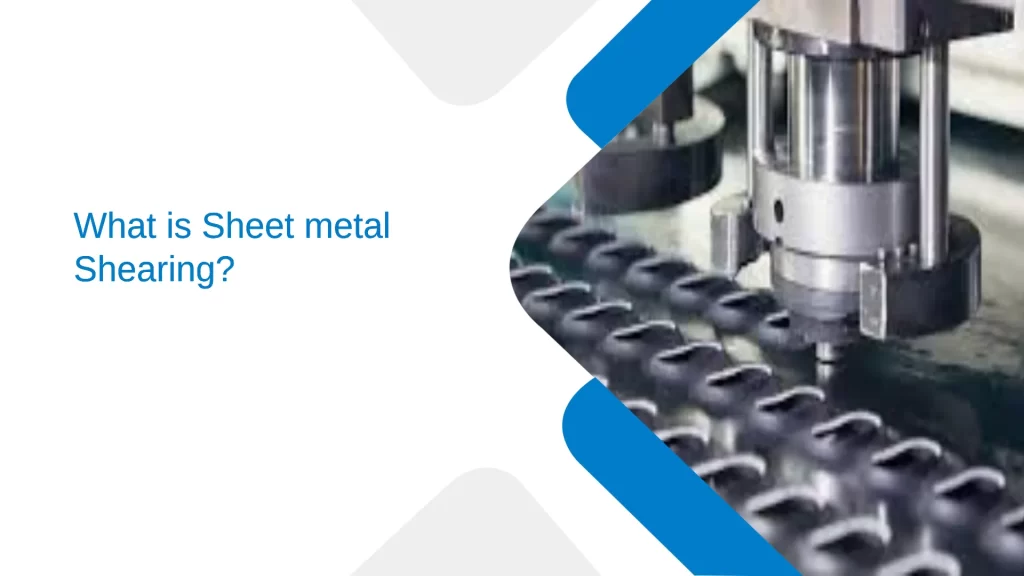
Sheet metal shearing is a cutting process where a metal sheet is separated along a straight line by applying opposing forces from two sharp blades, one above the sheet and one below. The upper blade comes down against a fixed lower blade, and the material caught between them fractures cleanly along that line. No material is removed in the process, no heat is generated, and no chips are produced. The result is a straight, precise cut edge.
It is important to understand that while several cutting operations use shearing force, including blanking, punching, and notching, the term “shearing operation” in sheet metal specifically refers to this straight-line cutting action using a shear machine. The other operations are related but distinct.
How the Shearing Process Works: Step by Step
Understanding what actually happens inside the machine during a shearing operation helps you get better results and diagnose issues like burrs or rough edges. The process moves through four distinct stages:
Stage 1, Sheet Positioning
The sheet metal is placed flat on the machine bed. A squaring arm or back gauge is used to position it precisely so the cut line is exactly where it needs to be. Proper positioning here determines the accuracy of every cut that follows.
Stage 2, Plastic Deformation Begins
As the upper blade makes contact with the sheet and starts to push downward, the metal begins to deform plastically. The material bends slightly and the stress within it builds up. At this point, the sheet is not yet cut, it is being pushed beyond its elastic limit.
Stage 3, Penetration and Smooth Cut Surface
The punch continues to compress and penetrate the workpiece. As it does, a smooth, burnished zone forms on the cut edge. This is the portion of the cut where the blade has physically pressed into the material cleanly. The quality of this zone depends on blade sharpness and the clearance between the upper and lower blades.
Stage 4, Fracture and Separation
Once the stress in the material exceeds its ultimate shear strength, fracture initiates at the opposing cutting edges and the sheet separates. This fracture zone makes up the lower portion of the cut edge. A small die clearance between the blades facilitates this clean fracture. If the clearance is too wide, the edges become rough and burry; too tight, and the blades wear out quickly.
Types of Shearing Machines Used in Sheet Metal Operations
Not all shearing machines are built the same. The choice of machine depends on the material thickness, volume of production, and the precision required.
- Guillotine Shear (Power Shear): The most widely used type in industrial sheet metal fabrication. It uses a moving upper blade and a fixed lower blade. Powered by either mechanical or hydraulic components, guillotine shears deliver fast, repeatable straight cuts and are ideal for high-volume production.
- Bench Shear (Lever Shear): A manual, bench-mounted tool used for lighter-gauge materials. It is slower than powered machines but offers good control for smaller workshop settings or prototype work.
- Hydraulic Shear: Uses hydraulic pressure to generate the cutting force, making it suitable for thicker materials, sometimes up to half an inch or more for mild steel. Preferred where consistent cutting force and reduced vibration are needed.
- Swing Beam Shear: Similar to a guillotine shear but with a pivoting blade, which reduces blade wear and produces a smoother shearing action, especially on thinner sheets.
- Mechanical Shear: Driven by flywheels and mechanical linkages, these machines are fast but less flexible compared to hydraulic types. Common in environments where cycle speed is the priority.
Shearing Operations in Sheet Metal Fabrication
The shearing process in sheet metal encompasses a family of related operations, each designed for a specific cutting task. Here is a look at the most common ones:
- Blanking: The sheet is cut to separate a defined shape called a blank from the surrounding stock. The blank is the desired piece; the surrounding material is the scrap.
- Punching (Piercing): Similar to blanking but the cut-out piece, called a slug, is the scrap. What remains in the sheet is the usable part with a hole punched through it.
- Notching: Material is punched out from the edge of the sheet to form a notch. Used frequently before bending operations to allow for clean corner joints.
- Slitting: Straight cuts are made along the length of the sheet, producing strips of a set width. No scrap is generated. Commonly used in coil processing.
- Trimming: Excess material is sheared from the perimeter of a formed part, such as removing the flange from a drawn cup.
- Lancing: A partial cut is made in the sheet without removing material. The cut material stays attached and is bent to form tabs, vents, or louvers.
- Shaving: A very small amount of material is sheared from the edge of a previously cut feature. Used to improve dimensional accuracy and surface finish.
Factors That Affect the Quality of a Shearing Operation
Getting clean, burr-free cuts consistently is not just about having a good machine. Several variables come into play:
- Blade Clearance: The gap between the upper and lower blades is critical. Too much clearance creates a rough fractured zone and burrs. Too little and the blades wear prematurely.
- Material Properties: Softer metals like aluminium can be sheared in thicker gauges than harder materials like stainless steel. The tensile and shear strength of the material directly determines the force required.
- Blade Condition: Dull blades tear rather than cut. Regular maintenance and re-sharpening are essential for consistent edge quality.
- Punch Speed: The speed at which the upper blade descends influences cut quality. Higher speeds can sometimes lead to better cuts in softer materials but may cause deformation in harder ones.
- Lubrication: Proper lubrication reduces friction between the blade and workpiece, extending tool life and improving cut quality in certain applications.
Benefits of the Shearing Process in Sheet Metal
Manufacturers continue to rely on sheet metal shearing for good reasons. Compared to other cutting methods, it offers a combination of speed, economy, and surface quality that is hard to match for straight-line cuts:
- No heat-affected zone: Shearing is a cold process, meaning the material’s mechanical properties and surface finish are preserved throughout.
- Near-zero material waste: No chips or material is removed during the cut, making it one of the cleanest and most material-efficient sheet metal operations available.
- High-speed production: A shearing operation typically takes just seconds per cut, making it exceptionally fast for high-volume work at service centres and fabrication shops.
- Versatility across metals: Shearing works well on steel, aluminium, copper, brass, stainless steel, and more, making it a flexible tool for multi-material fabrication environments.
- Cost-effective at scale: Because it requires no consumables (no laser gas, no abrasive wheels), shearing is highly cost-effective particularly when cutting large quantities of sheet material to size.
Where is Shearing Used? Industry Applications
The shearing process in sheet metal finds application across a wide range of industries. Any sector that works with flat metal stock will encounter shearing at some point in its supply chain:
- Automotive: Body panels, structural brackets, and chassis components all start as sheared sheet blanks before further forming.
- Construction and HVAC: Duct systems, cladding panels, and roofing sheets are routinely produced via shearing.
- Aerospace: Lightweight aluminium sheet components for airframe structures are cut using precision shearing machines.
- Electronics and Enclosures: Server racks, switch boxes, and control panel housings all go through shearing as part of their fabrication sequence.
Final Thoughts
The shearing process in sheet metal remains one of the most reliable and efficient operations in modern fabrication. Its ability to deliver clean, straight cuts without waste, heat, or chips makes it indispensable whether you are sizing raw coil stock, preparing blanks for stamping, or trimming finished components. The key is understanding which machine type, blade clearance, and operating parameters suit your material and production volume.
At Eigen Engineering, we bring expertise in all major sheet metal operations, from shearing and blanking to bending and deep drawing. If you are looking for a fabrication partner who understands the process from raw material all the way through to finished component, get in touch with our team today.
Frequently Asked Questions
What is the difference between shearing and blanking in sheet metal?
Shearing produces straight-line cuts to reduce sheet size, while blanking punches a specific shape out of the sheet. In blanking, the cut-out piece is the desired product (called a blank). In shearing, the goal is simply to trim or size the sheet along a straight path.
What materials can be sheared in sheet metal fabrication?
Most ductile metals can be sheared, including mild steel, stainless steel, aluminium, copper, brass, and titanium. Very hard or brittle materials are generally not suitable, as shearing may cause cracking or excessive blade wear.
What thickness of sheet metal can be sheared?
Standard shearing machines typically handle mild steel up to around 6mm (1/4 inch). Hydraulic shears with high tonnage can cut up to 12mm (1/2 inch) or more. The maximum thickness also depends on the material, stainless steel and harder alloys have lower limits than soft aluminium.
Does shearing cause work hardening in sheet metal?
Yes, to a small degree. The localised stress near the cut edge can cause slight work hardening in that zone. For most fabrication purposes, this is not an issue, but for applications where the edge will be bent or further formed, edge conditioning or shaving may be done to restore ductility.
What is the difference between shearing and laser cutting?
Shearing uses physical blade force and is limited to straight cuts, but it is very fast and cost-effective for high volume. Laser cutting uses a focused beam and can produce any shape or contour, but it is slower and more expensive per cut. Shearing is the preferred choice when only straight cuts are needed at scale.
About Author
Related Posts