
Types of Automotive Electrical Connectors
- Electrical & Electronics |
- Jul 21, 2026
Pop the hood of any car built in the last ten years, and you’ll find something that looks less like an engine bay and more like a server room. Sensors, control units, wiring looms, charging modules- all of it stitched together by hundreds, sometimes over a thousand, small plastic-and-metal parts doing a job nobody notices until it fails: the automotive electrical connector.
At Eigen Engineering, we get asked about connector selection more than almost anything else on the electrical side of vehicle design. It’s a fair question, because the wrong connector doesn’t just look sloppy on a wiring diagram, it causes voltage drops, intermittent faults, and in the worst cases, a car that won’t start on a cold morning for no reason anyone can find. So let’s walk through what these parts actually are, the main types you’ll come across, and how to think about picking one.
What Does an Automotive Electrical Connector Actually Do?
Strip away the jargon, and a connector automotive engineers rely on is simply a joint, a point where two circuits meet so power or data can pass through without interruption. Older cars got away with basic splices and a handful of fuses. Modern vehicles can’t. Between infotainment systems, ADAS cameras, engine management, and (increasingly) EV battery packs, a single vehicle can carry well over a thousand individual connection points. Each one has to survive vibration, heat, road salt, and years of thermal cycling without letting go.
That’s the whole game with automotive electrical connector design: reliability under conditions that would wreck a standard household plug within a month.
Main Types of Automotive Connectors
1. Multi-Pin Connectors
When several circuits need to terminate at one point, think ECUs, lighting clusters, or infotainment modules, multi-pin automotive connectors do the heavy lifting. They pack a lot of contacts into a small housing, often with colour-coding, keying, and polarisation built in so an assembly-line worker (or a technician years later) physically can’t plug it in wrong. This is one of the biggest reasons wiring mistakes have dropped so much on modern production lines.
2. Sealed and Waterproof Connectors
Anything living near the underbody, the engine bay, or an EV charging port needs to shrug off water, dust, and oil. Sealed automotive connectors use silicone or rubber gaskets to block moisture ingress, and in electric vehicles this isn’t optional, a few drops of water in the wrong place can short a battery pack. Manufacturers push these through salt-spray testing, thermal shock cycles, and vibration rigs before they’re trusted on a production line, and the better ones can genuinely handle a full car wash or a muddy trail without blinking.
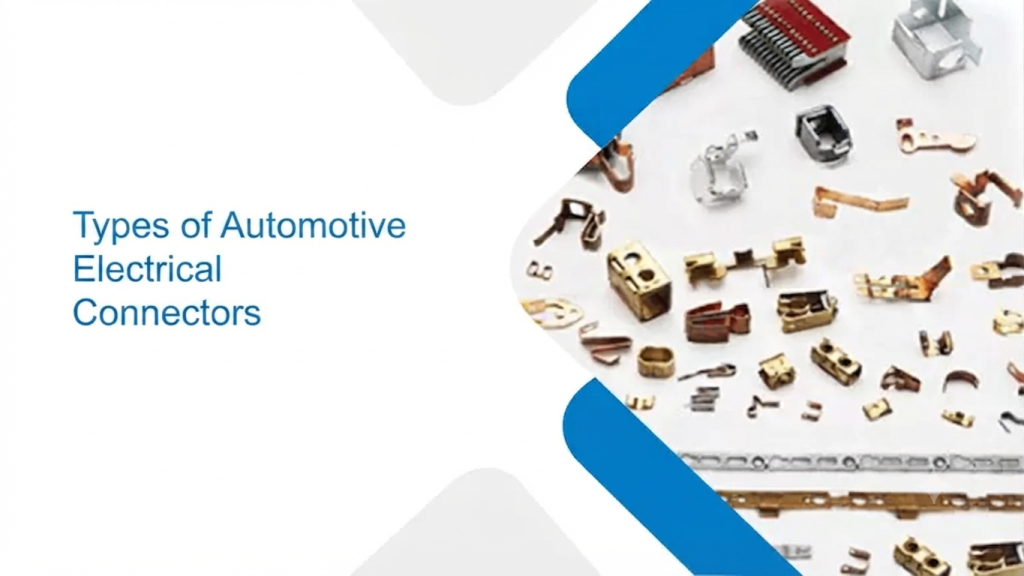
3. Automotive Wire Terminals
The terminal is the actual point of metal-to-metal contact, and it comes in a few common shapes, ring, spade, bullet, and blade being the usual suspects. A ring terminal bolts down for a permanent, vibration-proof connection; a bullet or blade terminal is built for quick insertion and removal. Get the crimp wrong, or let corrosion creep in, and you get exactly the kind of maddening intermittent fault that sends people down a diagnostic rabbit hole for hours. Tin, nickel, and gold-plated terminals each strike a different balance between cost, conductivity, and corrosion resistance, which is worth knowing before you assume “gold is always better” (it isn’t, for every job).
4. Quick Disconnect Connectors
These exist purely to make life easier at the workbench. Batteries, headlamp assemblies, and safety systems often use quick disconnect connectors so a technician can pull a part without cutting into the harness. Good ones combine a firm locking mechanism with an equally firm “click” so nobody’s left wondering whether it actually seated.
5. Circular and Rectangular Plug-and-Socket Types
Sensors tend to favour circular connectors; control modules and dashboards tend to be rectangular. The distinction isn’t cosmetic, it’s about mechanical stability, correct alignment, and how well the interface locks under vibration. A loose fit here shows up later as signal noise or a flickering warning light that nobody can reproduce reliably.
6. High-Temperature Connectors
Near turbochargers, exhaust sensors, or power inverters, standard plastics simply melt or lose their dielectric properties. High-temperature automotive connectors, made from materials like PEEK or PTFE, are designed to operate reliably above 150°C without softening or cracking, which matters a lot when the alternative is a sensor going dark mid-drive.
7. High-Voltage EV Connectors
Electric vehicles operate at 400–800V, and that changes the entire design brief. High-voltage EV connectors need multi-layered shielding against electromagnetic interference, flame-retardant housings, and interlocks that prevent accidental disconnection under load, a genuine safety feature, not a nice-to-have. As EV adoption climbs, this is easily the fastest-moving category in the whole connector world.
Choosing the Right Connector: A Few Practical Notes
There’s no single “best” connector, only the right one for the job. Before specifying anything, it’s worth checking current rating, wire gauge compatibility, sealing requirements, and expected temperature range. A connector rated for signal-level current has no business carrying a battery feed, and a connector that’s “mostly” waterproof isn’t the same as one rated for full submersion. This is where a lot of avoidable failures actually start, not with bad parts, but with the wrong part for the environment.
Final Thought
Connectors rarely get any credit, nobody admires a wiring harness the way they admire a dashboard or an engine note. But every headlight that switches on, every sensor reading that reaches the ECU, and every charging session that completes without a hitch depends on these small parts doing their job quietly. At Eigen Engineering, that quiet reliability is exactly what we design for, whether it’s a conventional wiring harness or the high-voltage architecture behind the next generation of electric vehicles.
People Ask About Automotive Connectors
What’s the difference between sealed and unsealed connectors?
Sealed connectors use gaskets or gel-filled cavities to block moisture and dust, making them suitable for engine bays, undercarriages, and EV modules. Unsealed connectors are cheaper and fine for dry, protected interior locations, but they’ll corrode fast anywhere near water or road spray.
Are all waterproof connectors submersion-proof?
No, this is a common myth. Waterproofing typically protects against rain, splashing, and washdowns, but full submersion for extended periods needs a connector specifically rated for it. Always check the IP rating rather than assuming “waterproof” covers everything.
What wire gauge works with standard automotive connectors?
Most automotive connectors are designed for wire in the 10–20 AWG range, though heavy-duty applications like battery cabling need thicker gauges. Matching the connector to the correct gauge prevents resistance build-up and voltage drop.
Is crimping better than soldering for automotive terminals?
For nearly all automotive wiring, yes. Crimped joints handle vibration fatigue far better than soldered ones, which can develop stress fractures over time from constant flexing.
Why do EV connectors need extra shielding?
High-voltage systems generate more electromagnetic interference, which can disrupt nearby sensors and control electronics. Shielding, combined with safety interlocks, keeps both the data and the people working around the vehicle protected.
About Author
Related Posts