What Is Flexible Copper Busbar? Types, Structure & Industrial Applications
- Busbars |
- Apr 7, 2026
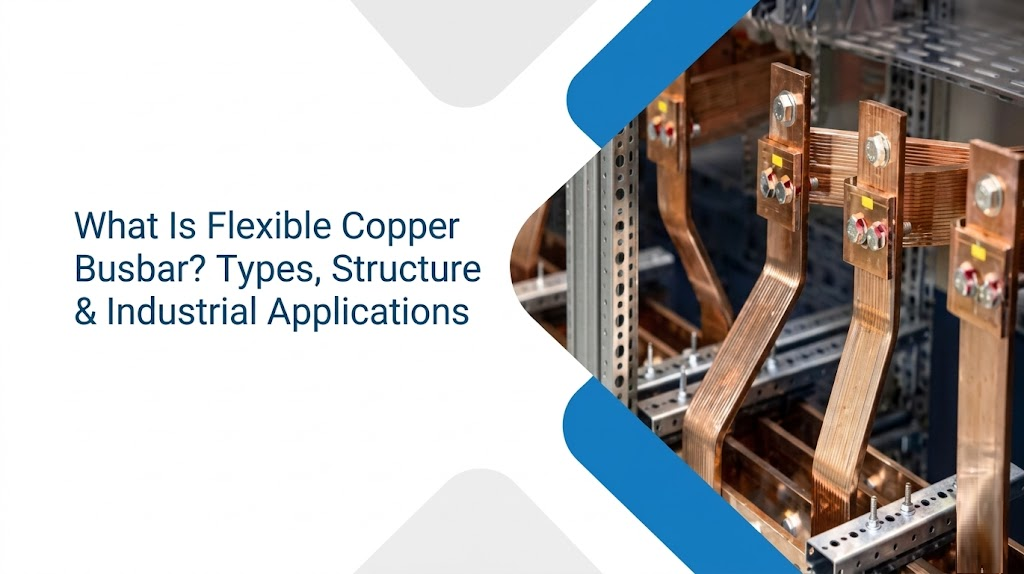
More than ever, the need to achieve efficient, reliable and flexible power distribution components has never been more critical in the fast-changing world of modern electrical engineering. One of the greatest innovations in this field is the flexible copper busbar, which is an element that has not only revolutionised the way electrical systems are designed and installed in industries.
At Eigen Engineering, we are aware that flex busbars are an important consideration towards providing safe, high-performance electrical services in a variety of applications.
What is a Flexible Copper Busbar?
Flexible copper busbar is a multilayered conductive electrical component made of a series of thin copper foil layers approximately 0.1 mm to 1 mm thick, bonded and insulated. In comparison with their rigid counterparts, the flexibility of the busbar allows bending and shaping of the busbar and, rerouting, through complex installation circumstances, without structural or electrical loss.
These parts are produced in a very accurate method which involves welding, stamping, electroplating, forming and insulation. The flexible copper busbar is long-lasting and reliable, as surface plating (usually of tin or nickel) increases corrosion resistance and offers better solutions to contact reliability.
Structure of a Flexible Copper Busbar
To understand the performance characteristics of a flexible busbar, it is important to understand how a flexible busbar is constructed:
- Conductive Core: The core of the flexible copper busbar is made up of a combination of finer copper strands or foil layers, which have been literally twisted or overlaid. This flexible core made of copper is exceptional in its conduction of electricity and, at the same time, possesses mechanical flexibility. The cross-sectional area depends on the current requirements that are rated.
- Insulation Layer: Then wrapping around the conductive core is the insulating material, most commonly made of PVC, XLPE or EPR. This coating protects the busbar from moisture, corrosion, and some accidental interference, protecting user safety and the stability of the system.
- Protective Cover: The outer covering (manufactured of PVC, synthetic rubber, or metal) protects the extra copper busbar against mechanical damage, abrasion, and exposure to chemicals, extending service life greatly.
- Accessories: Connectors/clamps/mounting brackets: Connectors, clamps, and mounting brackets make up the entire assembly to ensure smooth connection of the electrical equipment to the other part.
Types of Flexible Copper Busbar
To choose the appropriate solution for particular types of applications, it is critical to comprehend what kind of busbar to use. Depending on various factors, flexible copper busbars can be categorised:
1. Based on Structure
- Metal mesh-covered busbars for enhanced strength and electromagnetic shielding
- Fire-resistant busbars for high-risk environments
- Water-resistant busbars for outdoor or humid conditions
2. Based on Layer Configuration
- Single-layer busbars for standard applications
- Multi-layer busbars for higher current capacity and improved conductivity
3. Based on Shape
- Flat flexible busbars for compact installations
- Round-shaped busbars for higher mechanical strength
- Tubular busbars for improved heat dissipation and reduced weight
4. Based on Application
- Electrical panel busbars
- Substation busbars
- Electric vehicle busbars
- Elevator system busbars
These differences show that the busbar solutions can be flexible and can be adjusted to suit different industrial needs.
Advantages of Flexible Copper Busbars
The advantages of flexible copper busbar as compared to traditional rigid busbars and electrical cabling are very attractive:
- High Flexibility: The key feature of the flexible busbar is that it can be installed in tight or non-irregular spaces and bent, which makes the procedure of installing it easier and causes fewer problems with elaborate cable handling.
- Exceptional Electrical Conductivity: As a base material, copper displays excellent conductivity properties, more than aluminium and most other conductive metals. This is a copper flexible construction, which reduces power losses and promotes the overall system efficiency.
- Durability and Longevity: Flexible copper busbars are made out of high-grade copper with corrosion plating, which means that they resist oxidation, vibration, thermal cycling and mechanical stress, which means that they can last a long time in operation.
- Ease of Installation: Engineered connectors and ready-made terminations can be easily installed more quickly and more reliably than the old cable joints, saving labour hours and costs.
- Safety: insulated and sheathed flexible busbars have a major role to play when it comes to accidental contacts, short circuiting and spreading of fire in electrical systems.
- Cost Efficiency: The lower cost of installation, minimisation of energy waste and minimisation of maintenance needs are all cost-effective and save considerable costs throughout the life of the product.
Applications of Flexible Copper Busbars
Flexible copper busbars are the practical choice whenever high current needs to travel through tight corners, vibrating machinery, or spaces that shift and move over time. Built from layers of thin copper foils or braided strands, they bend easily without cracking or losing conductivity, something rigid bars simply can’t offer.
Electrical Cabinets and Switchgear: Inside control panels, flexible busbars carry power from main feeders to breakers and contactors without eating up space. They come ready to install with built-in terminations, cutting down assembly time and removing the need for extra lugs or soldering.
Power Plants and Substations: When connecting generators to transformers or substation equipment, rigid busbars often become a headache in compact, maintenance-heavy environments. Flexible busbars slide into tight layouts easily, and their laminated structure helps spread heat across a larger surface area.
Renewable Energy Systems: Solar farms and wind turbines put equipment through constant temperature swings and vibration. Flexible copper busbars handle those stresses quietly, linking inverters, combiner boxes, and grid equipment without fatiguing over time.
Electric Vehicles and Battery Packs: EVs demand conductors that can take a beating, high currents, constant vibration, and sudden impacts. Flexible busbars connect battery packs, inverters, and motors efficiently, keeping voltage drop and heat generation low where it matters most.
Industrial Machinery and Robotics: Robotic arms and automated gantries flex thousands of times a day. Flexible busbars power those moving joints without the metal fatigue that would eventually crack a rigid bar, making them a natural fit for automation cells and overhead systems.
Buildings, Elevators, and HVAC: Routing power through elevator shafts, risers, and packed mechanical rooms calls for conductors that bend around obstacles. Flexible busbars handle those runs cleanly, connecting motor circuits and sub-distribution boards without the bulk of cable trays or ladders.
Conclusion
Flexible copper busbar is the elegant and advanced solution to the present-day distribution of electrical power. It is an essential component in every industry due to its mechanical flexibility, high conductivity, durability, and safety, which make it indispensable. At Eigen engineering, we take the work of providing high-quality flexible busbar solutions that are designed to meet the highest standards of performance, reliability and value of any application.
About Author
Related Posts